Polski
 English
 Nasze aukcje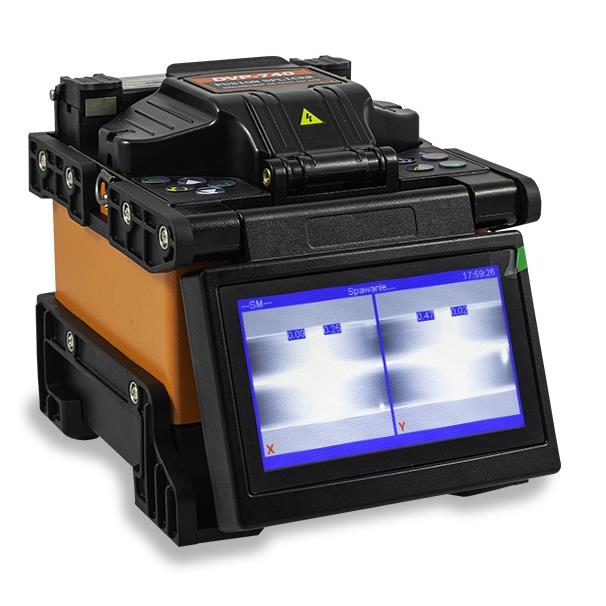
add
navigate_before
navigate_next
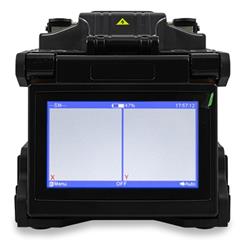
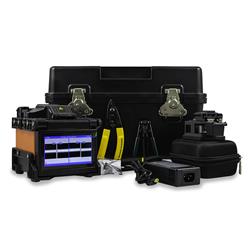
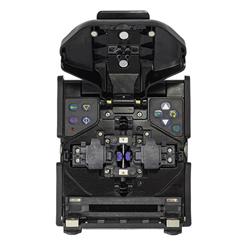



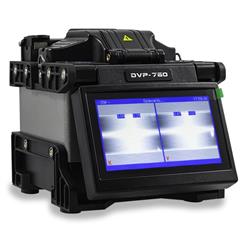
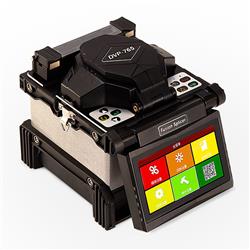
The DVP-740 fiber optic splicer has a fully automatic centering to the core in PAS technology and a set of interchangeable fiber holders (the latest 4 in 1 holders, universal holder and SOC holder), so we guarantee that all new solutions that may come in the future appear, they will oblige us only to buy new holders, and not replace the entire welding machine with a new model. The latest model with compact dimensions, it is technologically a very advanced welding machine. We grant a 3-year warranty for the welder. The DVP-740 is a model very popular among subcontractors for large telecoms such as Orange and Netia, but also for monitoring, automation, low-current installers and development subcontractors. Many internet and fiber optic TV providers operate on DVP models, including older models such as DVP-720B or DVP-730. DVP welders are characterized by a very long service life, reaching many years, if we keep the interior of the welding machine's working space clean, it will pay off with many years of trouble-free operation. The DVP-740 welders are designed to be reliable tools and do this job 100%. A fiber optic splicer for an installer is a tool like any other and it must work every time we enter a new installation.
Features


| Technical parameters | |
| Fibers | SM (single-mode), MM (multimode), DS (dispersion-shifted), NZDS (non-zero dispersion shifted, i.e. G655), EDF (erbium), Bending Loss Insensitive Fiber (G657), Pigtails, Subscriber cables and connectors |
| Return loss [dB] | ? 60 |
| Average insertion loss [dB] | 0.02 (SM), 0.01 (MM), 0.04 (DS), 0.04 (NZDS) |
| Welding method | Arc welding |
| Average welding time [s] | 8 |
| Sleeve sealing time [s] | 35 |
| Protective sleeve [mm] | 20, 40, 60 |
| Alignment method | Automatic centering to the core (PAS technology) |
| Fiber holder | Patented, replaceable and suitable for welding, among others drop cable, SC connectors, pigtails etc. |
| Strength of resistance test [N] | 2.0 (200gf) |
| Language | English, Polish and others |
| Welding procedures | 5 pre-set program groups 75 groups of manual settings |
| Life of the electrodes | At least 5,000 welds |
| General parameters | |
| Dimensions (width x length x height) [mm] | 142 x 122 x 138 |
| Weight [kg] | 1.95 |
| Display | Color 3.5 "TFT |
| Power | AC adapter: input voltage from 85 to 260V Built-in battery: voltage 12 V, 6.5 Ah (fully charged is enough for 120 continuous welding and welding cycles) |
| Memory | Up to 8,000 results |
| Interface | USB |
| Working conditions | Ambient temperature: -25 to 50 [° C] Perm. wind speed: 15 [m / s] Altitude: 0 to 5000 [m above sea level] Relative humidity: 0 to 95 [%] |
| The storage conditions | Ambient temperature: -40 to 80 [° C] Relative humidity: 0 to 95 [%] |


Don't Trust Fresh Inventions - welding machines manufactured by manufacturers without any experience have appeared on the market, the released models are experiments, and the customer becomes the guinea pig. DVP is a manufacturer with 20 years of tradition in creating fiber optic splicers.
nanjing dvp OE TECH CO., LTD is an ISO9001 certified manufacturer, has been designing and manufacturing fiber optic welding machines for many years. DVP can be found at the largest electronic and telecommunications fair in the world.
We provide you with a long warranty (36 months) and the certainty that the post-warranty service will be very cheap. Availability of parts is also ensured.
Intersell Technologie Światłowodowe Polska Sp. z o . o. has the status of the exclusive distributor of the DVP brand in Poland and the status of a service center in Poland. We have been selling DVP brand products for many years. For the welding machines we sell, the manufacturer grants a warranty period of 36 months. All service issues (warranty and post-warranty) are dealt with by our service. We offer you full after-sales support. 
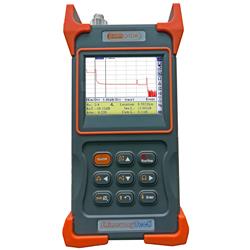
The PalmOTDR optical reflector allows you to detect and measure any events occurring in a fiber optic cable and certify fiber optic routes.
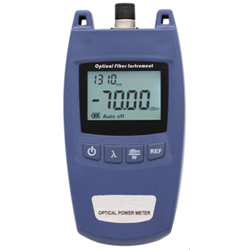
This optical power meter is a test device that, thanks to its capabilities and attractive price and very good workmanship, can be widely used in the installation, operation and maintenance of fiber optic networks. It works at six calibrated wavelengths: 850nm, 1300nm, 1310nm, 1490nm, 1550nm, 1625nm.

Manufacturer
Responsible person
Informacje o bezpieczeństwie
1. Zasilanie (dotyczy produktu zasilanego energią elektryczną)
Urządzenie może być zasilane zarówno z sieci elektrycznej, jak i z wbudowanego akumulatora (jeżeli dotyczy urządzęń z akumulatorem).
Podczas pracy z zasilaniem sieciowym należy stosować wyłącznie oryginalny zasilacz i przewód zasilający dostarczony przez producenta.
Nie wolno używać urządzenia w środowisku wilgotnym ani w pobliżu źródeł ognia.
W przypadku uszkodzenia przewodu zasilającego lub widocznych śladów uszkodzeń obudowy należy natychmiast odłączyć urządzenie od sieci i zaprzestać jego użytkowania.
Akumulator należy ładować wyłącznie przy użyciu dedykowanej ładowarki. Nie należy podejmować prób otwierania, rozbierania ani wymiany akumulatora na własną rękę.
2. Promieniowanie laserowe (dotyczy urządzeń z wbudowanym nadajnikiem laserowym)
Urządzenie zawiera źródło laserowe. Promień lasera jest niewidoczny dla ludzkiego oka, ale może być niebezpieczny.
Nigdy nie należy patrzeć bezpośrednio w zakończenia światłowodu ani do wnętrza portów optycznych, gdy urządzenie jest włączone.
Nie wolno kierować promienia lasera w stronę oczu ludzi ani zwierząt.
Prace instalacyjne i serwisowe powinny być wykonywane wyłącznie przez osoby posiadające odpowiednie przeszkolenie z zakresu bezpieczeństwa pracy z laserami.
Oznaczenia bezpieczeństwa i etykiety ostrzegawcze umieszczone na urządzeniu nie mogą być usuwane ani zasłaniane.
3. Bezpieczeństwo przy pracy ze światłowodami
Odcinki i resztki włókien światłowodowych mogą być bardzo ostre – istnieje ryzyko zranienia skóry oraz wniknięcia w tkanki.
Wszelkie prace związane z cięciem, obróbką czy usuwaniem włókien powinny być wykonywane w rękawicach ochronnych i na odpowiedniej powierzchni roboczej.
Odpady światłowodowe należy gromadzić w zamkniętych pojemnikach i utylizować zgodnie z zaleceniami BHP.
4. Ogólne zasady bezpieczeństwa
Przed rozpoczęciem pracy należy zapoznać się z całą instrukcją obsługi i przestrzegać zaleceń producenta.
Urządzenie powinno być używane wyłącznie zgodnie z jego przeznaczeniem – do pracy z sieciami światłowodowymi.
Nie należy ingerować w konstrukcję urządzenia ani dokonywać samodzielnych napraw.
W przypadku zauważenia nietypowego zapachu, dymu, przegrzewania się lub nieprawidłowego działania, należy niezwłocznie odłączyć urządzenie od zasilania i skontaktować się z serwisem.
Urządzenie oraz wszelkie elementy światłowodowe muszą być zawsze przechowywane i użytkowane z dala od dzieci.

 Cookies